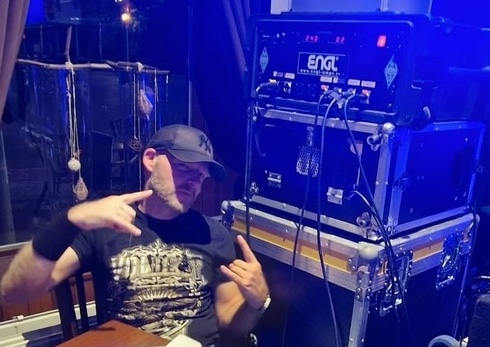
Waaronder als lead-gitarist van Rockformatie Voodoo waarbij hij als hoogtepunt mocht spelen in het voorprogramma van de Golden Earring tijdens het Oerrockfestival te Ureterp op 20 mei 2005.
Mijn muzikale gereedschapskist:
“Als allround gitarist in onze rock coverband moet ik schakelen tussen verschillende stijlen, van rockriffs tot ballads. Iedere stijl vraagt om een specifiek instrument (gereedschap). Het is als een beitel voor een beeldhouwer of een penseel voor een schilder.
Vanwaar deze passie? Elke gitaar heeft zijn eigen karakter. Ze zijn voor mij dan ook niet alleen tools, maar kunstwerken die mij blijven inspireren. De houtsoorten, de leeftijd en het gebruik van de gitaren beïnvloeden hun klank en geschiedenis, wat ik fascinerend vind.
Stiekem probeer ik mijn (te grote) collectie natuurlijk een beetje goed te praten. 🤫😜
Het hiermee op deze wijze online bijhouden, inclusief specificaties en serienummers doe ik deels uit praktische overwegingen, zoals voor verzekeringen of reparaties, maar ook om alles overzichtelijk te houden. Zo kan ik de geschiedenis en details van mijn gitaren gemakkelijk delen met anderen (gitaristen praten immers graag onderling over hun gear).
Benieuwd naar de verhalen achter mijn gear? Neem gerust een kijkje bij de foto’s en ontdek de wereld van mijn gitaren (van oud naar nieuw)” 🎸
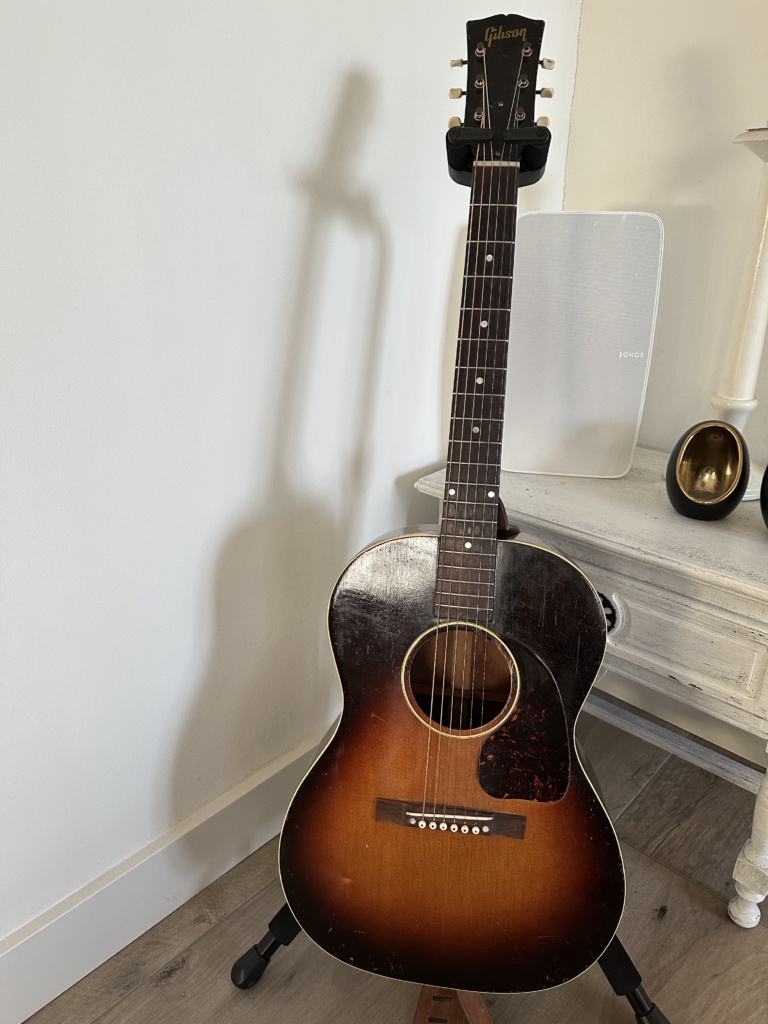
The LG-2 is a compact, vintage acoustic guitar renowned for its warm tone and timeless design. With a solid spruce top and mahogany back and sides, it delivers a rich, balanced sound that suits both fingerpicking and strumming. Despite its smaller, parlor-style body, the LG-2 offers a surprisingly full and resonant voice. Introduced in the post-war era, it quickly became a trusted, affordable workhorse for folk and blues musicians and is now a highly prized collector’s instrument, one of Gibson’s true acoustic icons.
I purchased this guitar in February 2022 at The Fellowship of Acoustics. After the purchase, Rowdy Prins (Hannah Mae, Floor Jansen, Mooi Wark, Suzan & Freek) recognized it immediately and shared that it had previously belonged to his colleague Milo. He recalled playing it himself during a short tour the year before and described it simply as “an unbelievably good guitar.”
Astro 1950s archtop jazz guitar with handwound P90
Restored and modified Astro archtop, made in the late 1950s in Germany at the Strohmer Luthery in Nuremberg.
This is a beautiful and rare Archtop model made under the Astro brand by Georg and Hans Strohmer. Their father, August Strohmer, founded the brand in 1906 together with Max Zimmer, another well-known name in the German instrument world. The Strohmer family built all kinds of stringed instruments, and in the 1950s, after August passed the company on to his sons, they began producing high-quality archtops as well.
Astro guitars are often considered a hidden gem among vintage enthusiasts: their craftsmanship is outstanding, yet they remain relatively unknown because the workshop was quite small. Given the design and build quality of this particular model, it might very well have been crafted by August Strohmer himself, making it not only a fine instrument but also a valuable piece of German lutherie history.
The neck is straight and it plays fantastic with a low action. Also it comes with new frets and a new handwound P90, wound by Guitar Harbor Vintage Guitars. What craftsmanship! Special thanks to Arne Fröhling, the luthier who restored this beauty (Check out his video, where he plays it).
Specs: Body depth; 7 cm Nut width: 43,7 mm Action low E string at 12th fret: 2 mm (0.10 D´Addario strings) Weight: 2,38 kg Scale: 620 mm Body width: 41 cm (about 16 inch)
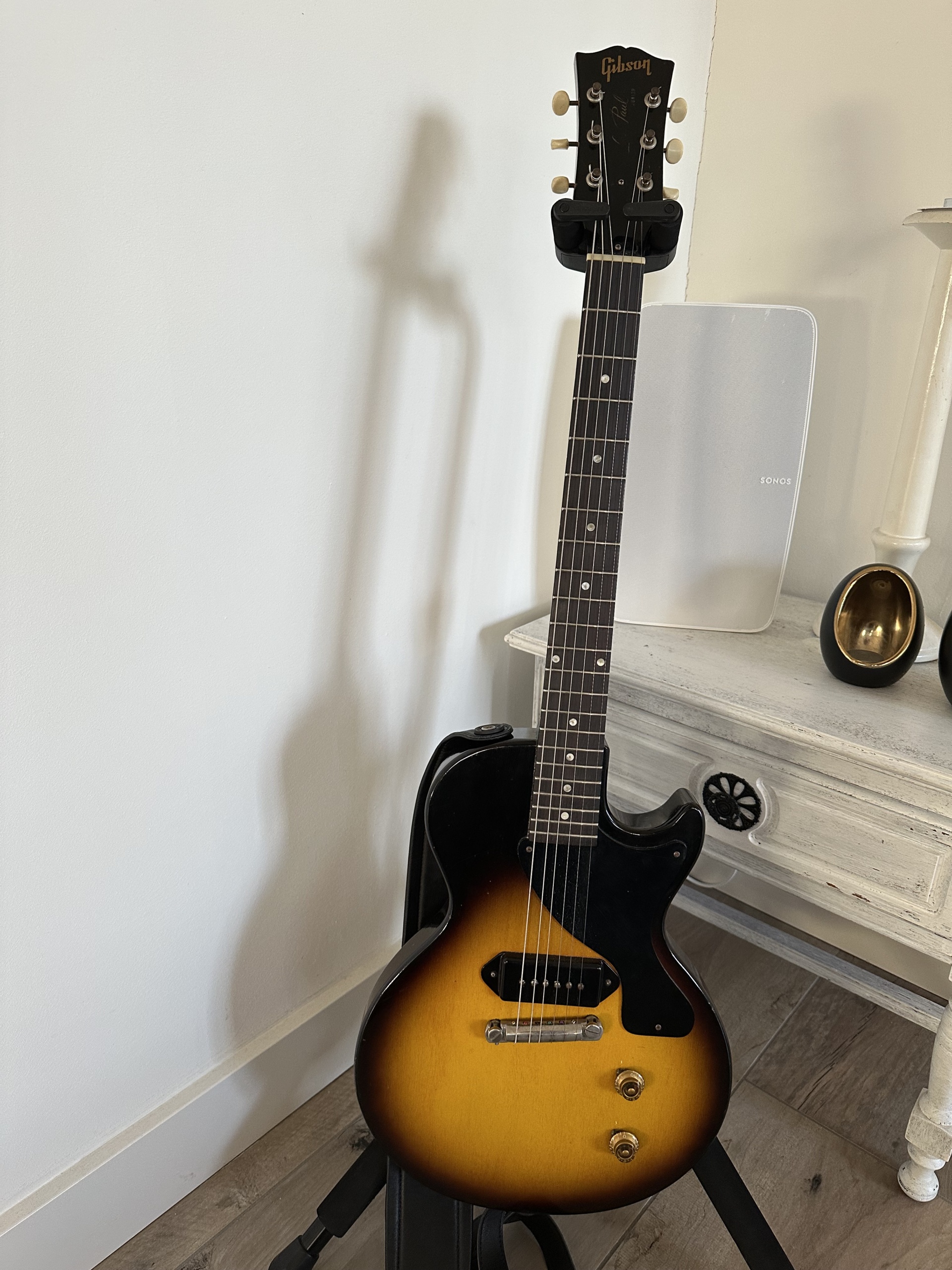
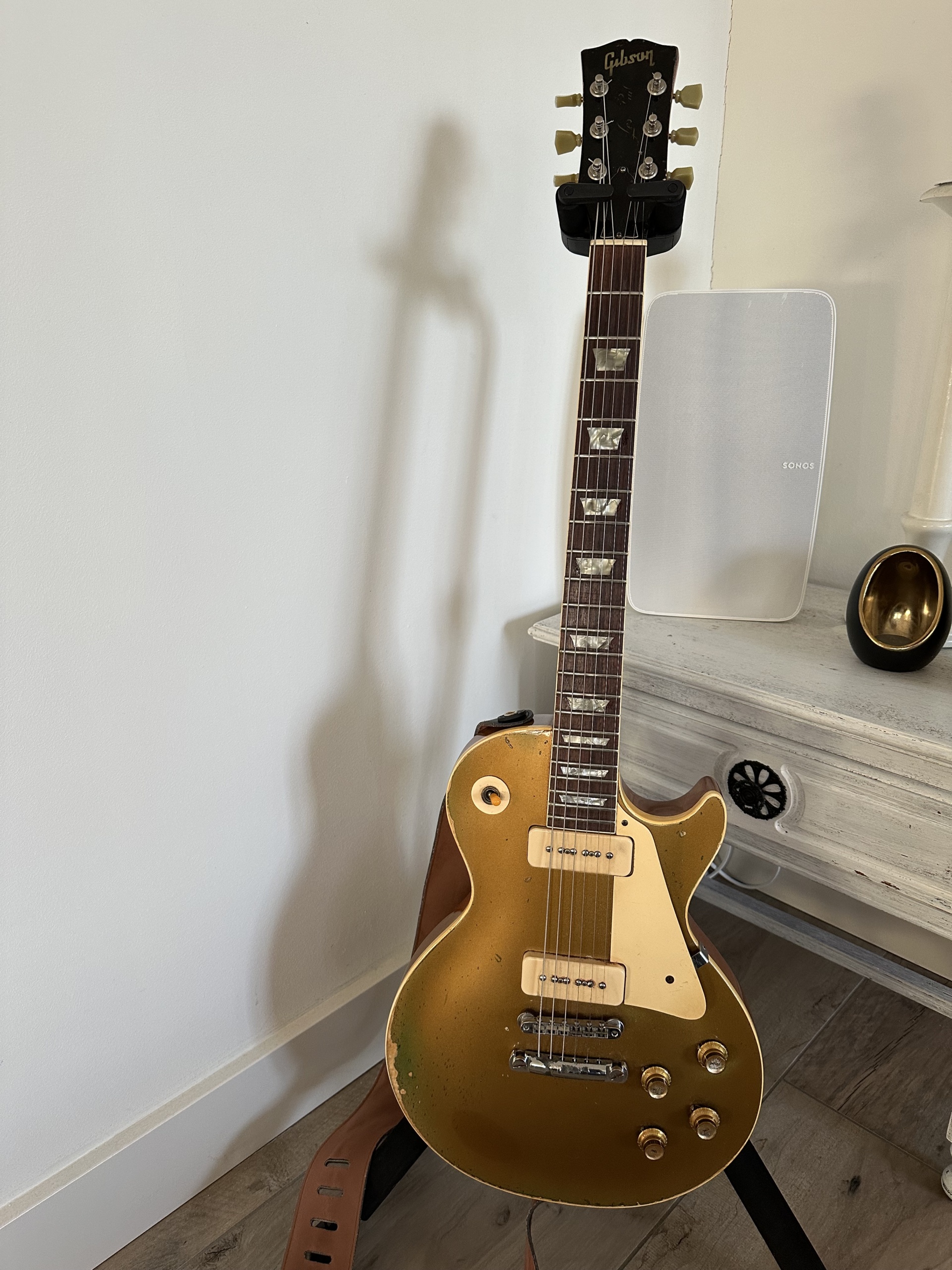
Gibson Les Paul Junior Singlecut Tobacco (1958) #8 1616
An original vintage 1958 LP Junior Singlecut in excellent shape with original parts, finish and case. The only change is newer frets and nut. Includes the original crocodile paper case. Purchased from RJV guitars (on Christmas Eve, December 24, 2024), who had recently acquired it from Carter Vintage Guitars in Nashville.
Check this video (new arrivals/ short), this one video (where it’s played) and also this video (guitar safari Amsterdam) from RJV guitars for the actual guitar! Or check out this amazing video of an identical guitar from the same year (’58) in a music store (Guitar Sauce) in Italy, which was also listed on Reverb. What an amazing solo and what a sound! I considered buying it in my search for this guitar, but the one from RJV was really super clean and played fantastically. I haven’t been able to find a cleaner one from this year yet! #8 1616
My absolute favorite, and not just mine, not exactly the same one, but two years younger: (video).
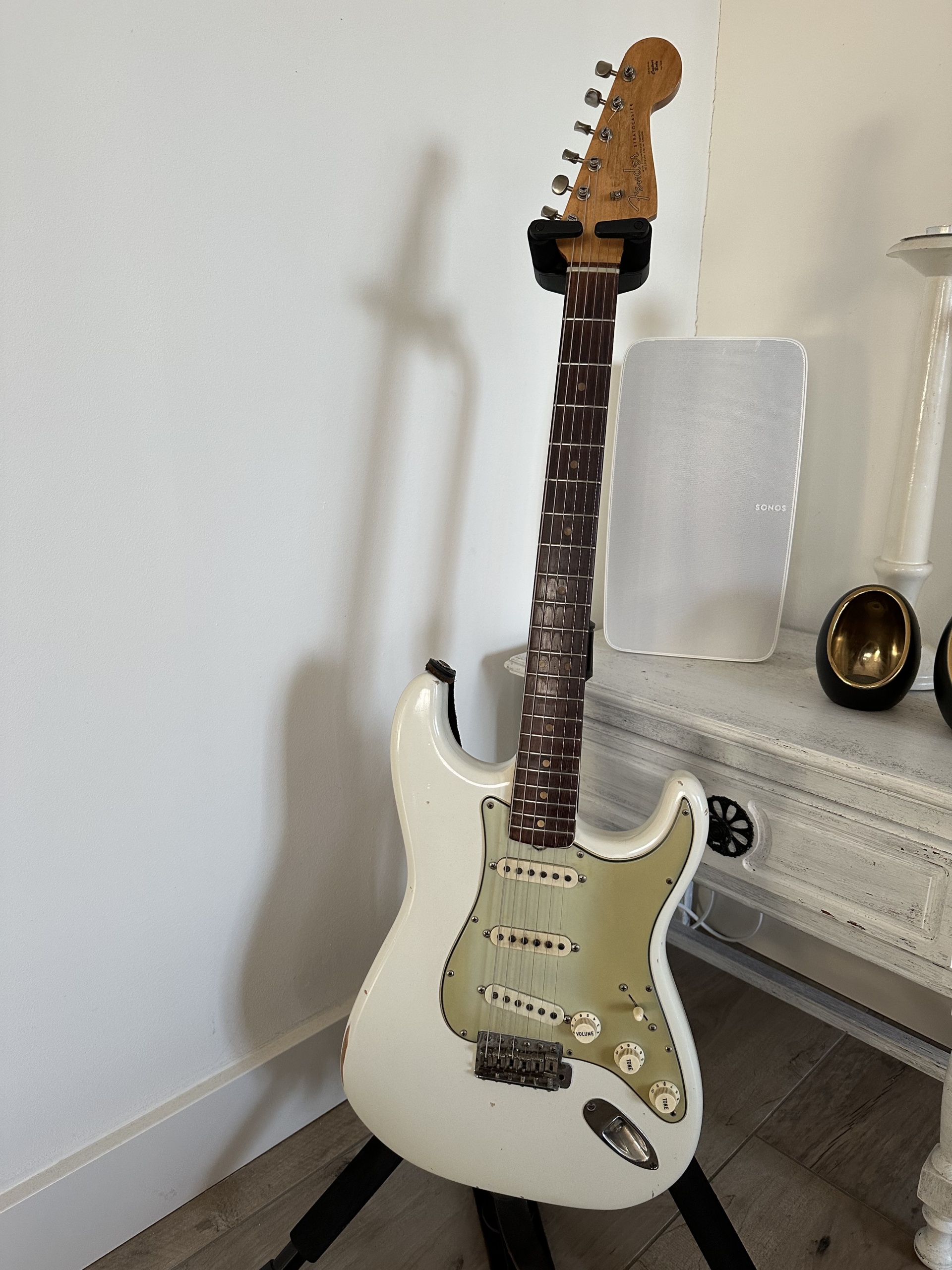
Fender Stratocaster (Refin) Olympic White (1963/64) #L24740
The real deal: Pre-CBS, spagetthi logo, “L” series, ‘clay’ dots and the mint green pickguard.
The guitar is referred to as a 1963/64 Fender Stratocaster because its components include features from both years. This is common with vintage guitars, as Fender produced and used parts in batches during this period. Here’s why the exact year cannot be tied to either 1963 or 1964: en pickguard from the early 1960s, which is in excellent condition with no cracks.
This guitar represents a transitional period at Fender, with a neck dated late 1963 and pickups, pots, and other components from early 1964. It has been carefully maintained and lightly modified (refinish, refret, and 5-way switch), but retains its original charm and authenticity. This makes it a true pre-CBS classic!
Click for more information
Neck Date: November 1963 The neck is stamped with “November 1963” as its production date, indicating that it was manufactured late in 1963.
Pickups and Pots: 1964 and 1965 The pickups are original, with readings of 5.5k, 5.7k, and 5.8k, and they date to 1964. Two of the pots are dated 1964, while one pot is from 1965. This suggests either a later replacement or that Fender used newer stock parts during assembly.
3-Way Selector Switch The guitar originally came with a 3-way selector switch, typical for Fender Stratocasters of this era, allowing players to select individual pickups. A 5-way switch has been installed for greater tonal versatility, but the original 3-way switch is included.
Pre-CBS Features The guitar has all the hallmark features of a pre-CBS Stratocaster. These include a spaghetti logo on the headstock, an L-series serial number, clay dot inlays on the fretboard, and a celluloid mint green pickguard from the early 1960s, which is in excellent condition with no cracks.
Body and Refinish The body has the correct 1963 hole pattern and routing. The Olympic White finish is a high-quality refinish performed many years ago. The finish shows minor crazing and aging, which adds to its vintage character.
Hardware All original hardware is present. This includes the ashtray bridge cover, tremolo arm, and “Pat. Pend” saddles, as well as the Kluson tuners and original single string tree. The correct shielding plate is present under the pickguard. A later backplate has been installed, but the original screws are included.
Playability and Sound The guitar has been refretted, improving its playability while preserving its vintage feel. It plays beautifully and delivers the classic Stratocaster tone, rich in character and clarity.
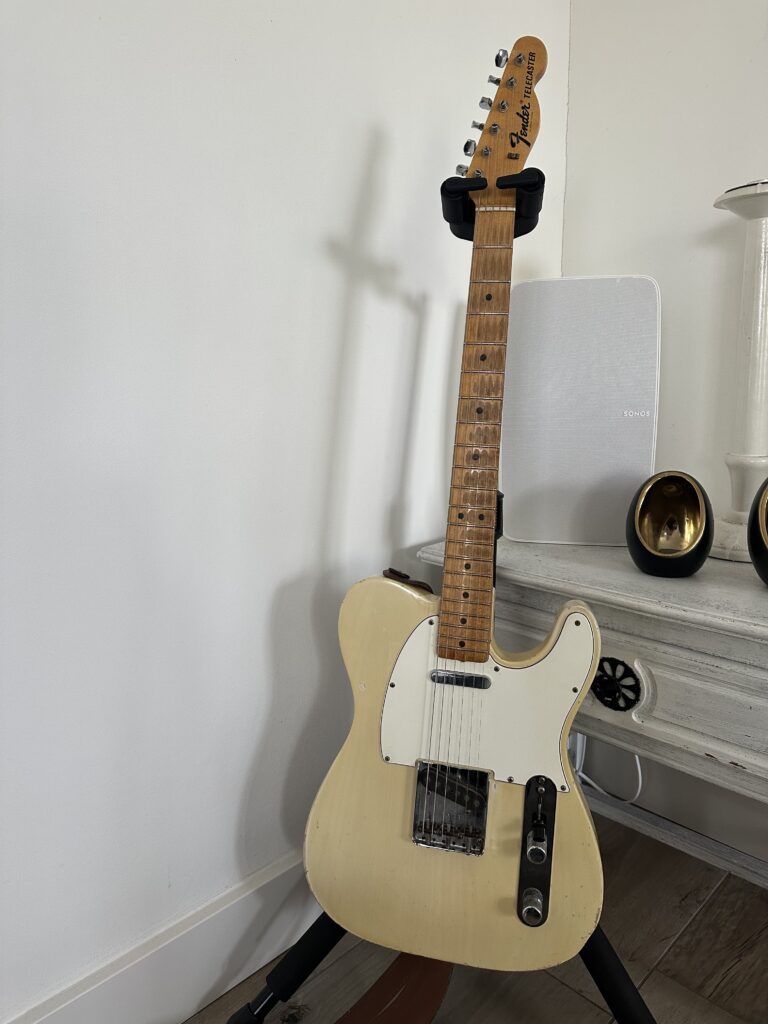
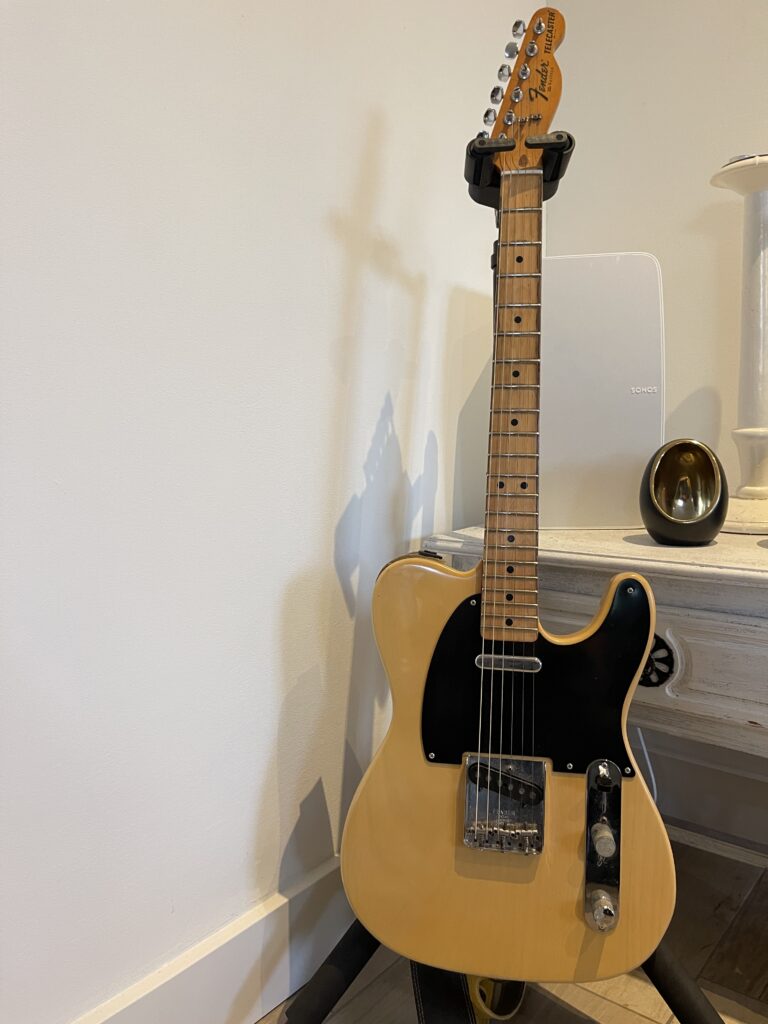
Fender Telecaster (1968) #235937
Finished in iconic Blonde, this guitar has retained its original, pristine white-blonde color without the typical vintage yellowing. The maple neck with a cap enhances both aesthetics and tonal clarity, delivering the bright, articulate sound valued by players worldwide.
Though largely original, the guitar has been refretted for optimal playability. It features a grey bottom bridge pickup with a pencil date. The neck pickup reads 6.45 kΩ for warm, rich tones, and the bridge pickup measures 5.83 kΩ, offering clear, punchy output. The only modification is a replaced 3-way switch for improved functionality.
This remarkable instrument includes its original case Combining vintage appeal, distinctive tone, and historical significance from the first CBS production year. The bridge pickup alone is worth its weight in gold. #Responsive & #Dynamic 👌
A ’69 with super rare ’68 features such as a 1-piece body, 1-piece neck with no volute, small headstock and long neck tenon. It is all original and has untouched electronics with 4x pots stamped 137.68.50, P-90’s and the no dotted ‘i’, open ‘b’ en ‘o’ logo. Check this video @TFOA (played by Leif de Leeuw). Leif has been named the best blues rock guitarist in the Benelux nine times in a row!
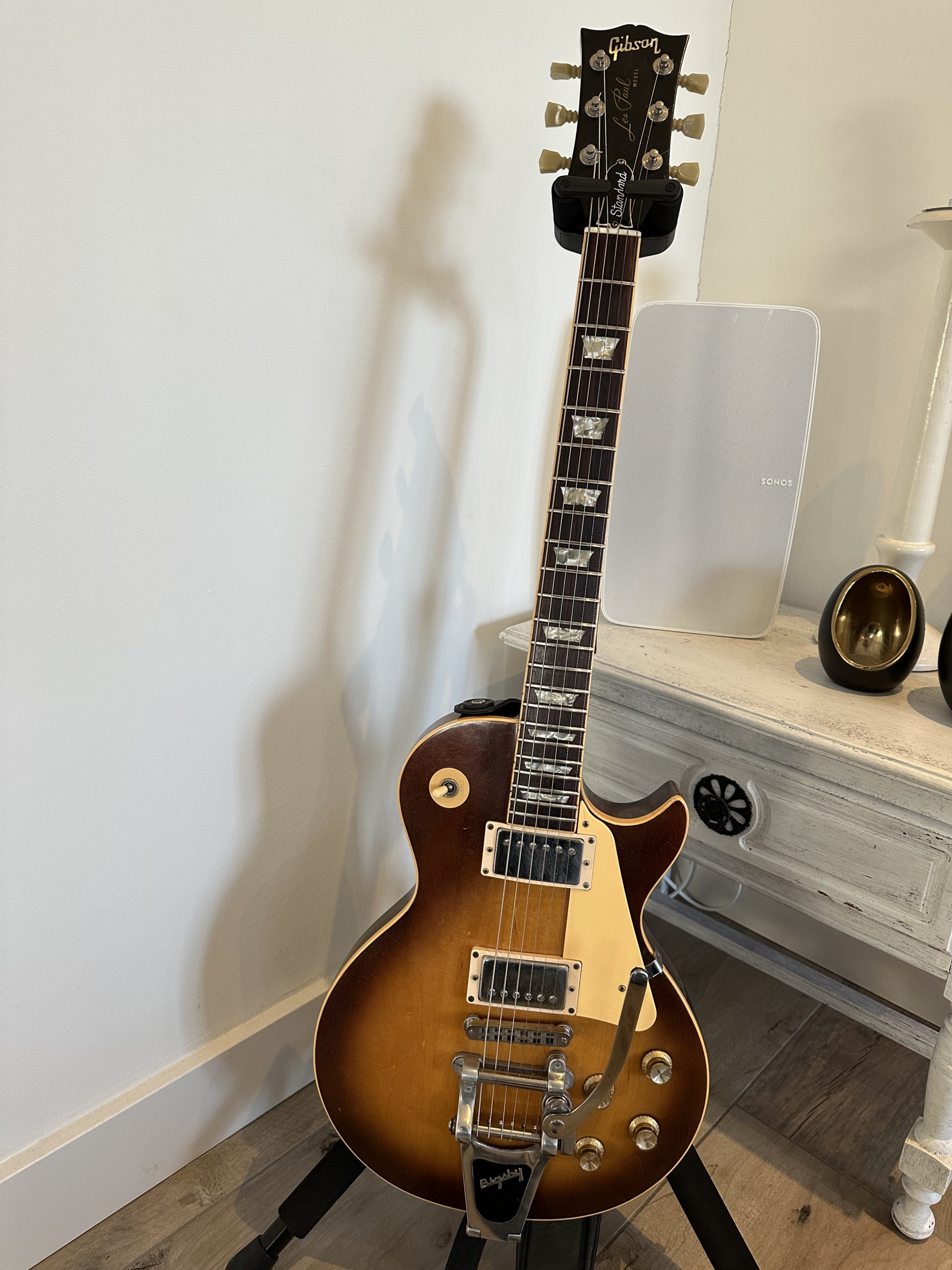
Gibson Les Paul Standard Tobacco Sunburst (1976) #00234044
Two modifications were carried out: The guitar’s body was routed to accommodate P90 humbucking pickups. These were later swapped out for the original pickups. The bridge has been replaced with a Bigsby. The original bridge is included.
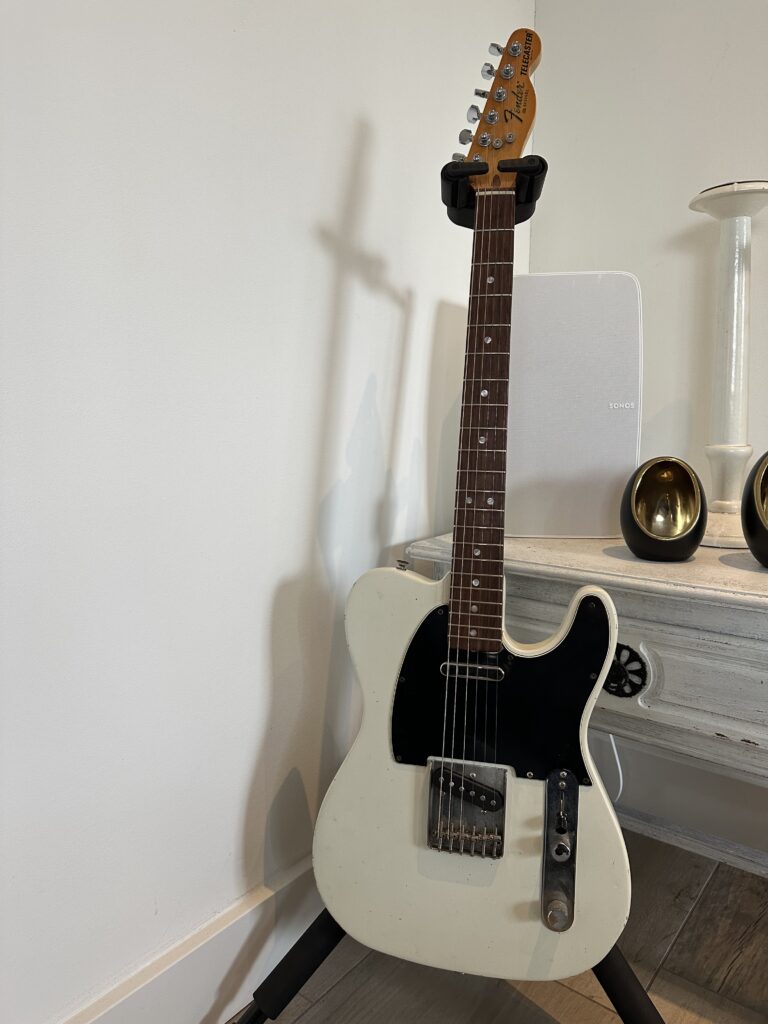
Fender (White) Blonde Finish (1978) #S839801
This 1978 Fender Telecaster has an ash body, a rosewood fingerboard on a maple neck, Olympic white color. It’s a guitar that has lived, so it has scratches and other “cosmetic” imperfections related to its age. The guitar has had some work done; it appears to have non-original tuners and possibly a non-original bridge. Otherwise the electronics work perfectly well. The sound is very slamming. The neck is very comfortable with a good fretting.
Bridge Analysis This Telecaster features a 6-saddle bridge in the classic ashtray style with four mounting screws, consistent with standard models from the late 1970s. The bridge plate lacks the typical “Fender Pat. Pend.” engraving, which is unusual but not unheard of for this period (could be after market?). During the CBS era—particularly around 1978—Fender began fitting some Telecaster models, including the Custom and Deluxe, with factory 6-saddle bridges. While this particular bridge may be a later aftermarket replacement, it is also quite possible that it was originally installed by Fender, given the company’s inconsistent hardware use at the time. The 6-saddle setup offers improved intonation over the traditional 3-saddle design and reflects the evolving construction style of that era.
The body appears to have its original white finish, which is notably less common than the more typical Blonde or Natural finishes seen in that period. This white finish can absolutely be original; finishes that have spent most of their life in a case often show much less yellowing or fading. For reference, a nearly identical white 1978 Telecaster with similar features can be seen in this video.
With its uncommon white finish — believed to be original — and period-correct 6-saddle bridge, this Telecaster stands out as a rare and authentic find, capturing the experimental spirit of Fender’s late-1970s production.
This is a remarkable vintage Fender Telecaster from 1978, built in the USA and offered with its original Fender hard case and warranty card. The person I bought it from had acquired it from the original owner, a devoted Shadows fan, who had the guitar custom refinished in Shadows Red, a color that wasn’t available from the factory at the time.
He (the seller) ensured the guitar was brought back to its former glory. The red finish was carefully removed by luthier Harry Fuhler (Fuhler Guitars, also affiliated with The Fellowship of Acoustics). Harry had previously done an outstanding refret on my 1980 Les Paul Custom (even between the binding!) but that’s another story. The neck and body were then professionally refinished in classic blonde nitrocellulose lacquer by Haar Guitars, a renowned Dutch workshop known for their exceptional custom-built instruments and vintage-correct finishes.
Harry Fuhler also performed a full refret on the neck. The original bridge pickup, which was no longer functioning, has been expertly rewound. All work has been carried out with great care and craftsmanship, resulting in a powerful-sounding, smooth-playing instrument—exactly what you’d expect from a late ’70s Telecaster.
The original pickguard is included, though a different one is currently installed. It appears the cavity for the neck pickup was slightly enlarged at some point, which is why the original pickguard no longer fits perfectly.
How I got this guitar: Interestingly, I came across this guitar through a gear trade. A gentleman bought a large batch of pedals from me (I was thinning out my collection—I already had three pedalboards). As it turned out, he had this Telecaster listed on Reverb. When he came to pick up the pedals, I asked him to bring the guitar along as well. We struck a great deal on the spot.
I have to admit, I still find it hard to truly “declutter.” Every time I sell something, it seems like something else finds its way back in. This guitar is a perfect example of that—too special to let pass by.
A characterful, professionally restored vintage Telecaster with history, tone, and soul—ready for its next chapter.
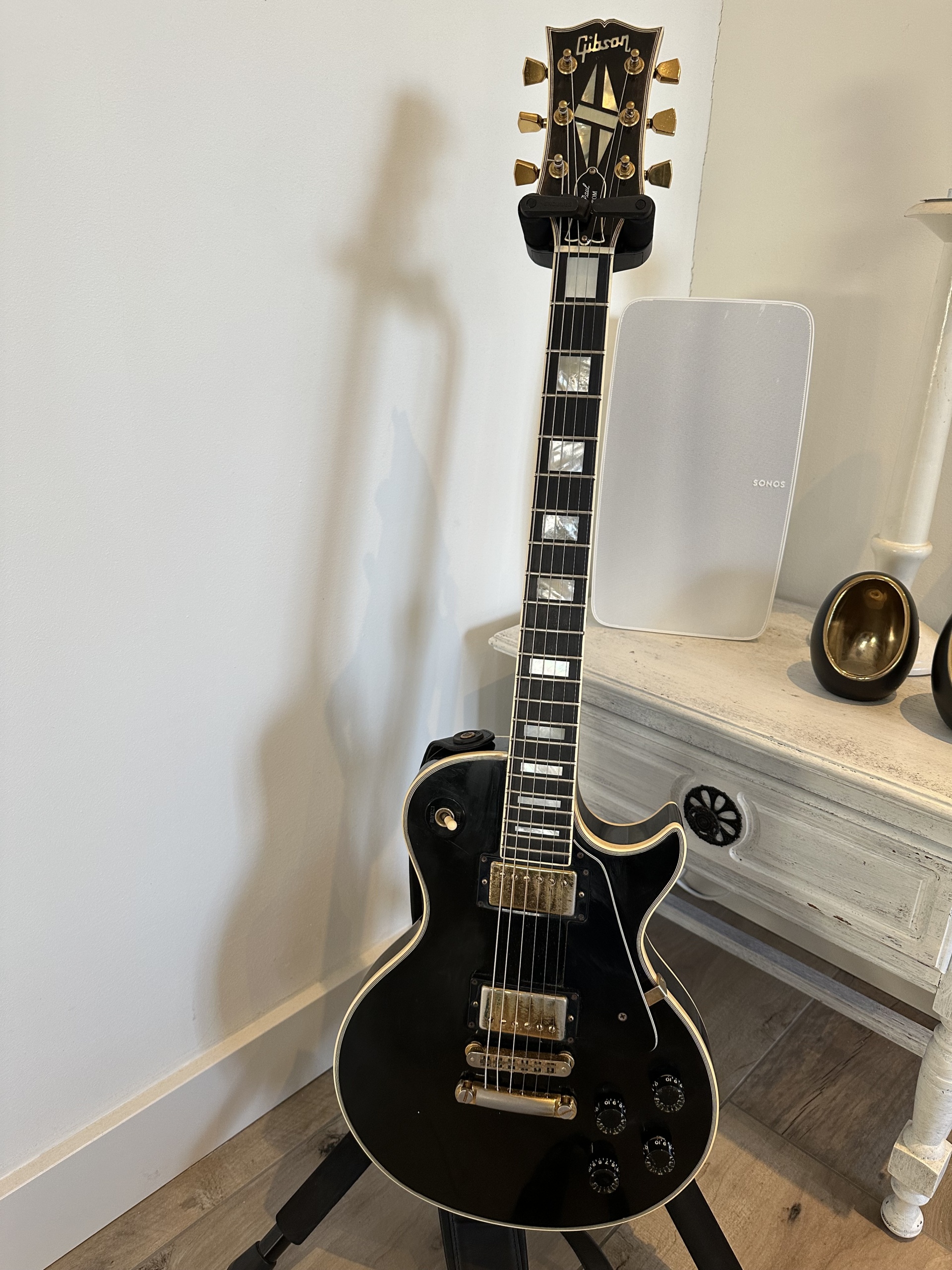
Gibson Les Paul Custom Black Beauty (1980) #80240509
Except for the necessary refret (at TFOA), completely original.
The Gibson Les Paul Custom Black Beauty from 1980, produced during the Norlin Era (1970–1985), is a distinguished model in Gibson’s lineup. This period was marked by significant changes in guitar construction and design. Notably, the solid mahogany body was replaced with a multi-piece mahogany body featuring a maple top, a construction method sometimes referred to as “pancake” body.
I had the refret (done with Jescar 47104 wire) done by Luther Harry Fulher at TFOA in March 2022. A refret between the bindings — beautifully executed! When I came to pick it up, they told me it had received a big round of applause from his colleagues for the fantastic job. It’s been my go-to guitar for live performances ever since.
For a closer look at another example of this same model from the same year, the following video might be informative: YouTube
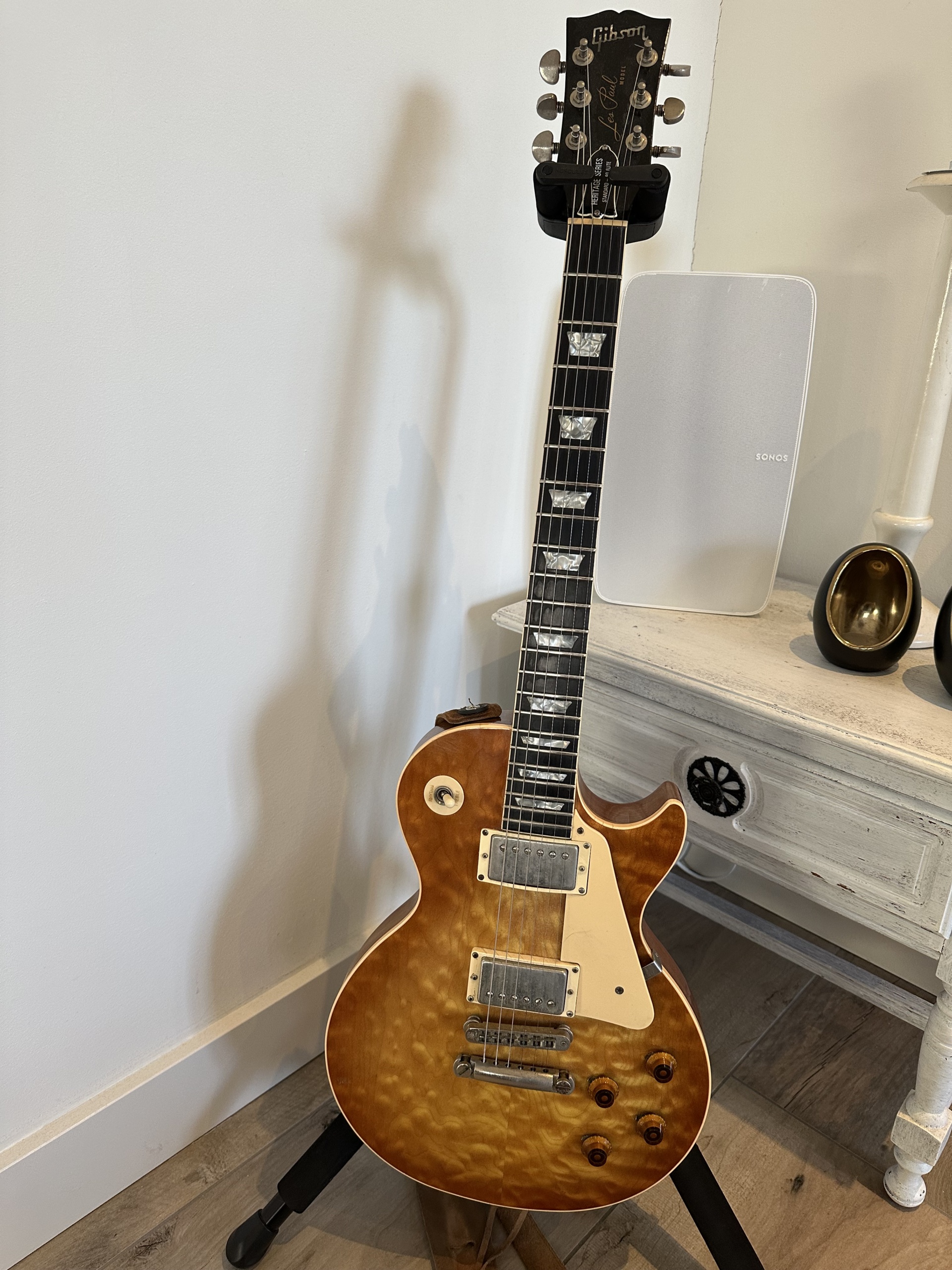
Gibson Les Paul Heritage 80 Elite (1982) #82082569
The Gibson Les Paul Heritage 80 Elite (1982) is a superb instrument inspired by the legendary 1959 Les Paul. Built during Gibson’s early reissue era, it was designed to capture the look, feel, and tone of the original ’59—while retaining a character of its own.
It features a solid mahogany body with a striking quilted maple top in warm Honeyburst. The ebony fretboard adds clarity and attack, while the original Tim Shaw–designed humbuckers deliver a rich, open, vintage tone reminiscent of classic late-’50s PAF pickups. The result is a highly resonant, expressive, and musical guitar.
Provenance I purchased this guitar in February from the TOFA collection of Rowdy Prins, a respected Dutch guitarist known for his work with artists/ bands such as Hannah Mae, Floor Jansen, Mooi Wark, Suzan & Freek, Bouke & the Elvis Matters BandIsa Zwart, Henk Wijngaard and Melrose. The guitar belonged to a close friend of his, and earlier to the late Dirk Stelder. Dirk’s connection to the instrument lives on, most notably in a video from August 2015 in which this very guitar can be seen:
Knowing its journey, through passionate players and caretakers, makes this Les Paul more than just a great instrument. It’s a guitar with a living history, and that history resonates every time it’s played. 🎸
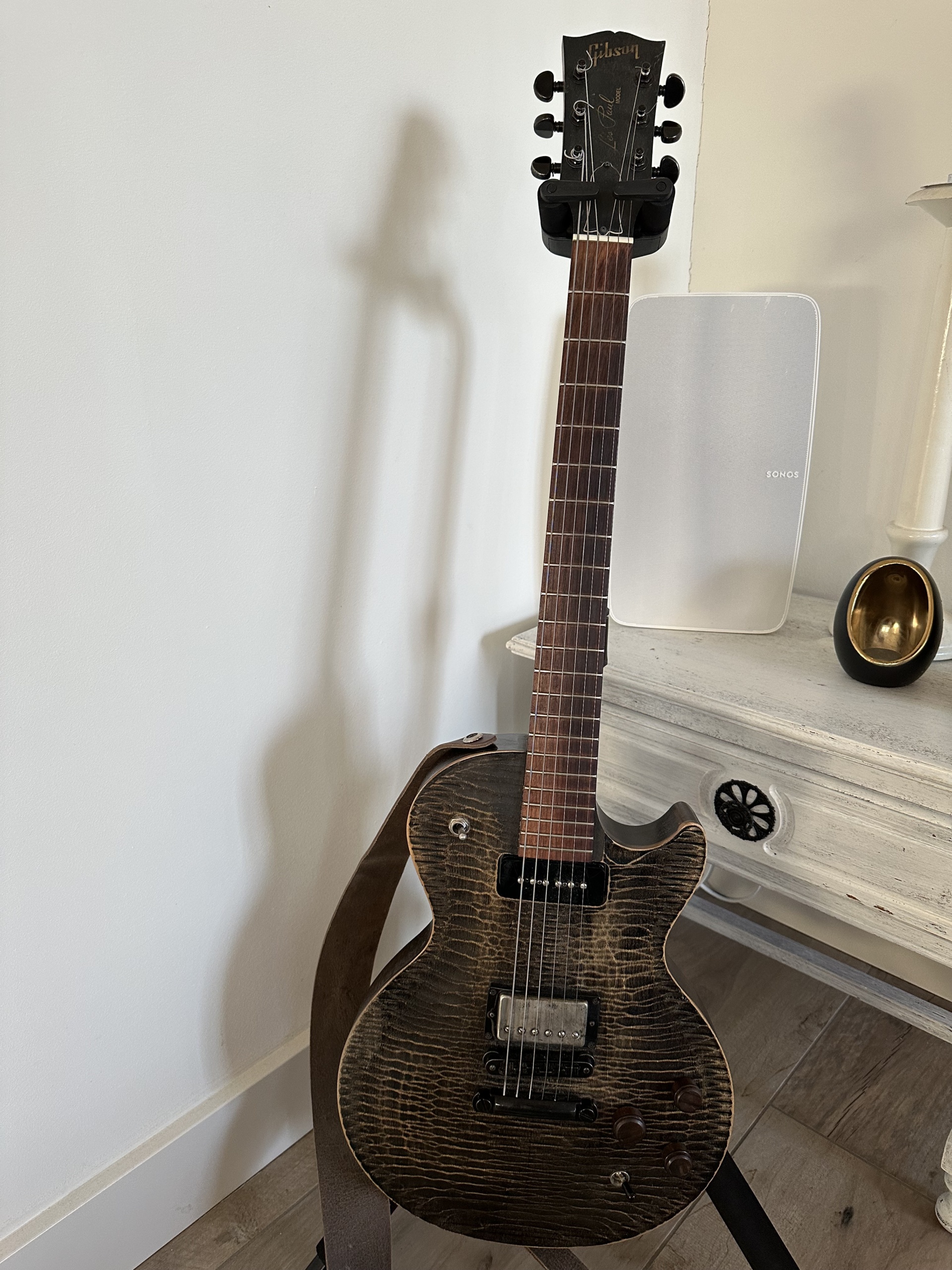
Gibson Les Paul BFG Mocca (2007) #003170381
I acquired this guitar in December 2020 from Madrid, Spain via Reverb.com, listed as a “Barely Finished Guitar.” It features a unique textured finish that feels like leather or reptile skin, giving it a distinctive look and feel.
Originally, the guitar came without a truss rod cover, but one has since been added for a cleaner appearance. The previously exposed zebra bridge pickup has been refined with a pickup cover (or a pickup replacement) and pickup ring, resulting in a more vintage-style look.
Electronically, the guitar has been modified in a very practical way. It originally featured two volume controls and one tone control. Now, both pickups are controlled by a single volume knob located in the bridge position, making on-the-fly adjustments far more convenient. One of the original knobs has been disabled and now serves purely as a dummy, preserving the guitar’s aesthetics.
The neck is wonderfully chunky and comfortable. The original kill switch remains intact. Tonally, the neck P90 delivers a smooth, warm, and rounded sound, complemented by a punchy bridge humbucker.
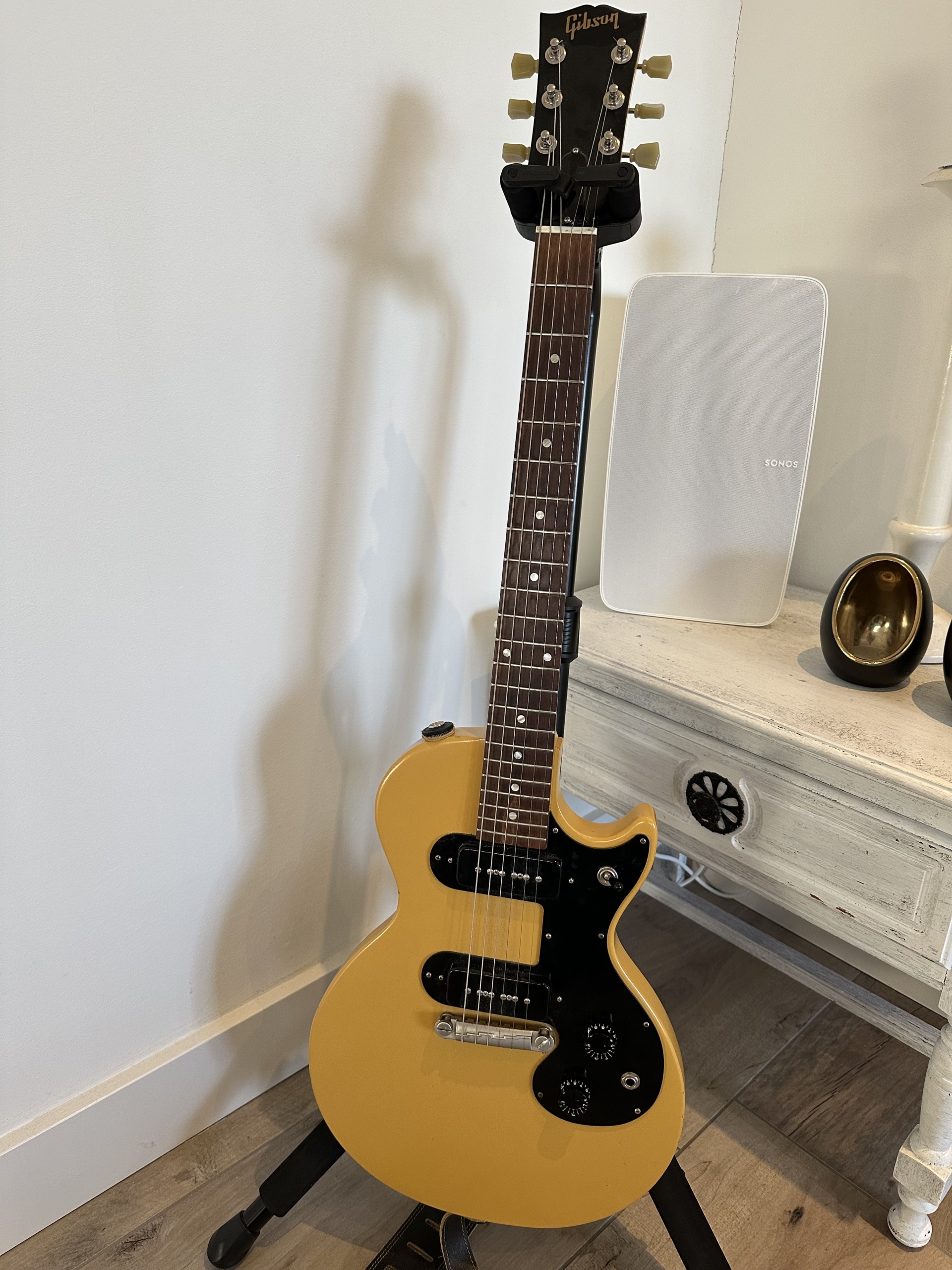
Gibson Melody Maker Special (2011) #127110674 Signed (on the back of the headstock) by John Hayes of Mother’s Finest Check: https://www.johnhayes.nl And John confirmed to me that he signed it when I met him during his Knight of the Guitar tour with Jan Akkerman (once named the best guitarist in the world by the readers of Guitar Player magazine) and Leendert Haaksma on December 23, 2018, at De Oosterpoort in Groningen. Guitarist John Hayes (currently residing in the Netherlands) has been involved with Mother’s Finest since 1990. Mother’s Finest scored several worldwide hits, including ‘Baby Love.’.
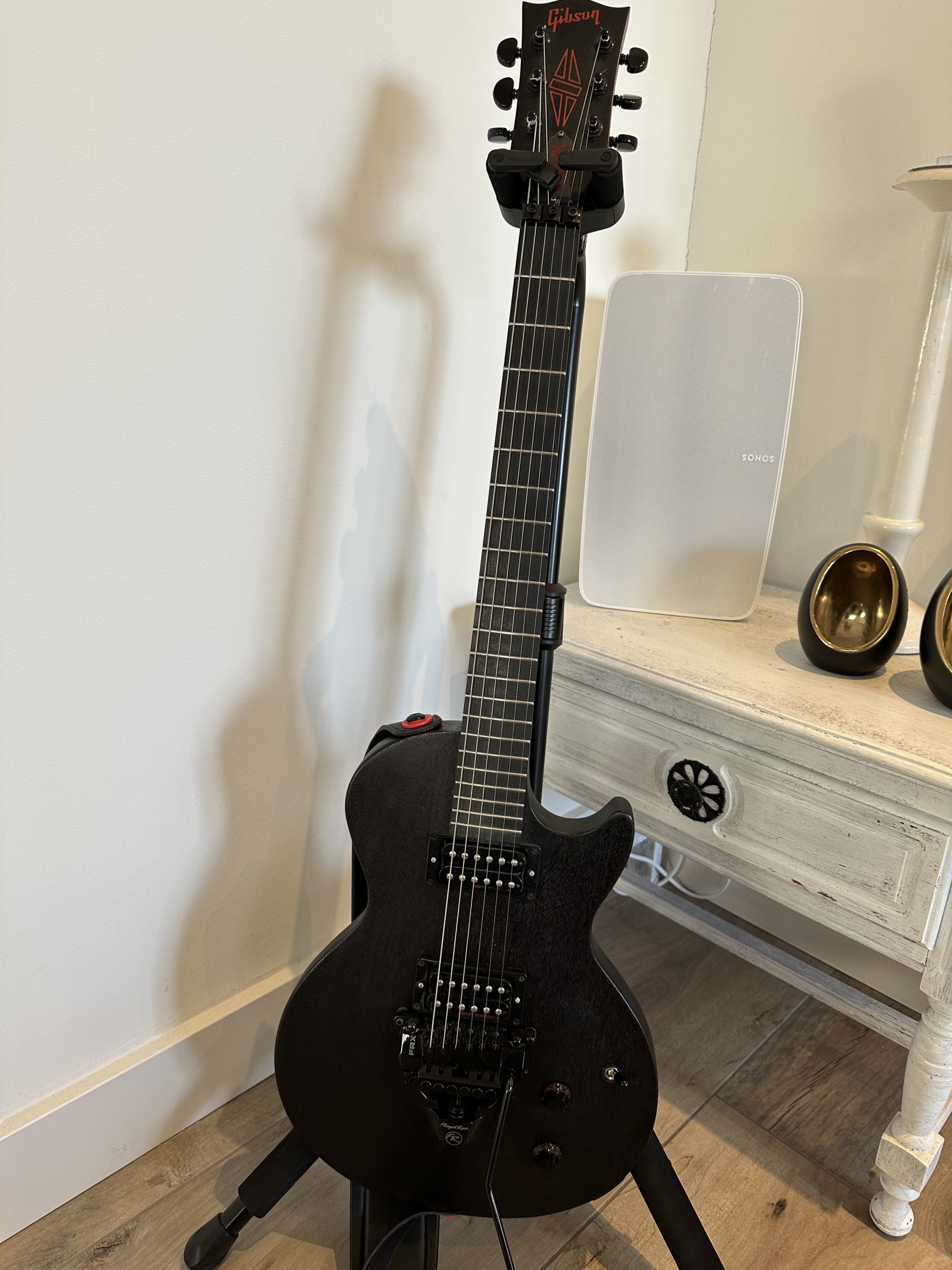
Gibson Les Paul CM FR EB LTD (2016)
#160056367 This Les Paul is lighter and thinner than the regular Les Paul, featuring a beautiful mahogany design with visible wood grain. The innovative Floyd Rose (FRX) tremolo system requires no routing, making the guitar exceptionally versatile. It also includes a thumb wheel that allows you to lock the tremolo, preventing it from returning, offering even more control over tuning. The ultra-hot 490R and 490T humbucker pickups deliver powerful, clear tones for various music styles. With its black finish and red details, it is a modern, refined guitar. This limited edition model is not only a technical masterpiece but also a valuable collector’s item.
Gibson Custom Shop Murphy Lab M2M 1956 Les Paul Standard British Racing Green Heavy Aged (2025) #6 5084
This Gibson Custom Shop ’56 Reissue captures the look, feel, and searing tone of an original 1956 Les Paul down to the finest details. A Les Paul Reissue from the Custom Shop isn’t just a tribute to the valuable vintage models — it’s a clone. It represents the culmination of decades of work by the expert Custom Shop team: a tireless quest to deliver accuracy and authenticity into the hands of fans.
1956 was the only full year the Les Paul model featured both the powerful P90 pickups and the adjustable ABR-1 bridge — a combination that gave the Les Paul a level of intonation and sustain like never before. The ABR-1 tune-o-matic bridge, stopbar tailpiece, P90s with cream-colored covers, and even the “Les Paul Model” decal on the headstock faithfully recreate the magic of a mid-50s Les Paul. Instead of the traditional Goldtop finish that adorned the 1956 Les Pauls, we opted to give this M2M a British Racing Green finish. Gibson’s M2M, or Made 2 Measure, program gives players the chance to create something unique, beyond the standard Custom Shop models. This special color was personally selected and commissioned by Coen Bults, owner of The Fellowship of Acoustics (TFOA), who shared with me the story of how he had this guitar custom built to his specifications.
Paired with the Murphy Lab relic treatment, this guitar exudes a well-played vintage vibe — and just looks incredibly cool! The Murphy Lab Heavy Aged finish, combined with aged hardware, simulates decades of intense playing wear, giving it the unique character, vibe, and feel of an original piece from the Gibson Golden Era.
Includes a case with certificate of authenticity. Video
Gear (main amps, effects, etc.):
Kemper Profiling Amplifier PowerRack (19″)
Kemper Profiler Remote
Matrix CFR12 (FRFR) wedge monitor
Mission Engineering EP1-KP-GN (2x) Volume and Wah
Line 6 Relay G50 wireless system
In-Ear systems: Shure PSM 200 P2T & NUX B-7PRO
In-Ears: Jerry Harvey – JH Audio Roxanne
Samson Powerbrite PB10 Pro
Strings: D’Addario XSE1046
*This only includes my main performance gear. Apart from that, I also have a ton of other amps and pedals. Because, after all, I’m still a regular guitarist. It’s never enough, always trying out everything… still chasing tone. 😉
Style: Inspired by and raised on the music of Slash and Zakk Wylde, I’ve always been drawn to powerful, expressive guitar playing. Their signature tones and techniques shaped my love for bluesy, hard-hitting riffs and soulful solos.
Love Paul Gilbert (listen to Gaul Pilbert ‘Fuzz Universe‘). And when it comes to guitar tone, Eric Steckel is my absolute favorite. His raw, dynamic sound—somewhere between vintage blues and modern fire—perfectly captures what I love about the instrument. Steckel is easily one of the most promising young guitar gods of this era, blending emotion, speed, and sheer power in a way that few can match.
Lately, I’ve also been listening to Richie Kotzen, another master of feel and technique. His fusion of rock, blues, and soul brings a whole different vibe, adding even more inspiration to my playing.